 By Admin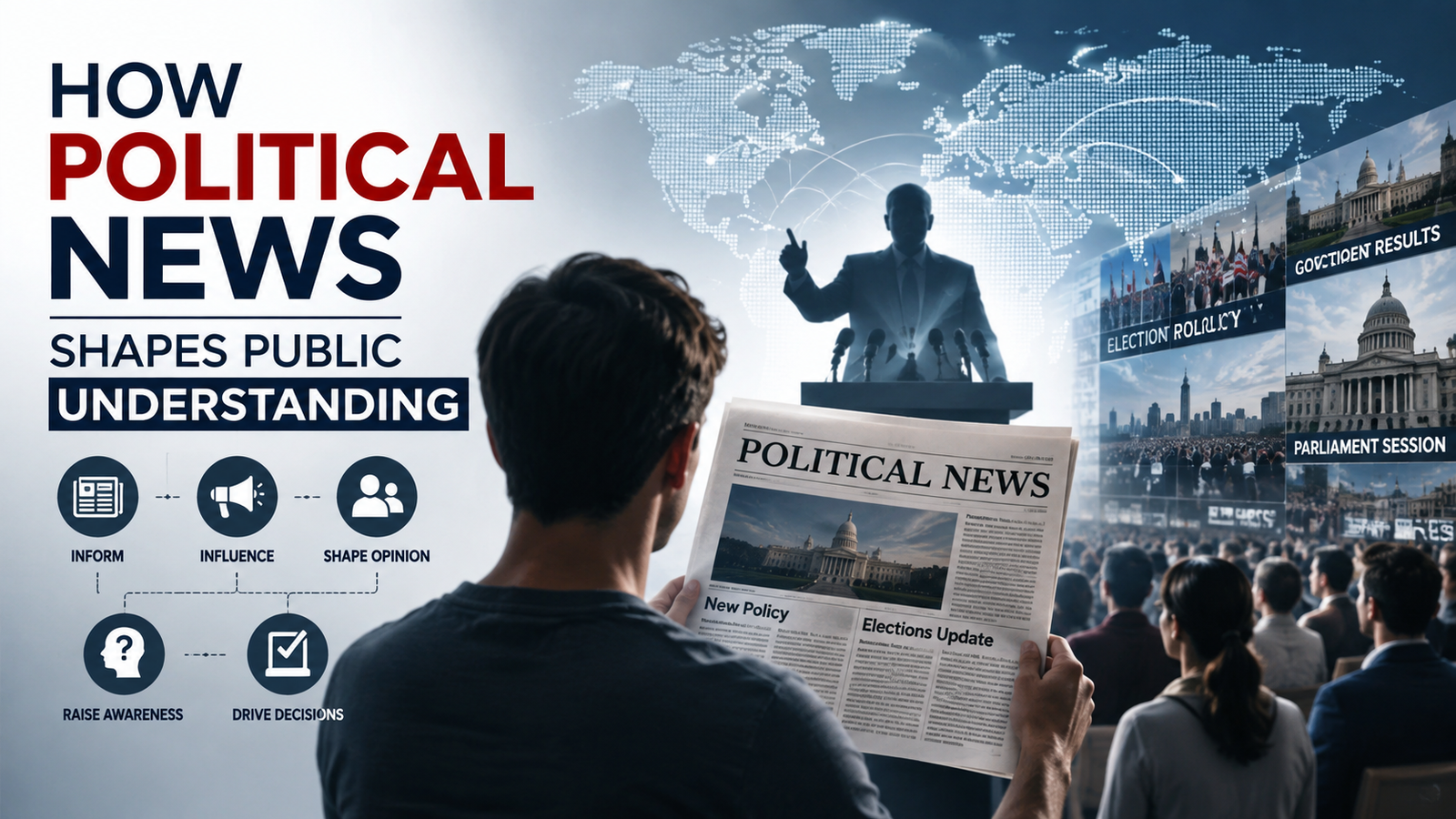
Political news has a powerful influence on the way people understand the world around them. Government decisions, elections, public policies, international events, and economic developments can affect communities in ways that are not always immediately obvious. By following political news carefully, people can better understand the decisions that influence their daily lives and the direction of their communities.
In the digital age, political information is available almost everywhere. Websites, newspapers, television networks, podcasts, and social media platforms provide people with constant updates about public affairs. Resources such as dewforpolitics.com can give readers another way to explore political topics and stay connected with current discussions. However, simply consuming large amounts of information does not automatically create better understanding. Readers also need to consider the quality, context, and reliability of what they see.
Why Political News Matters
Politics affects many areas of everyday life. Decisions made by elected officials and public institutions can influence taxes, education, healthcare, transportation, employment, business regulations, infrastructure, and public services.
For example, a new economic policy may affect household expenses, while changes in education rules can influence students and teachers. Decisions involving transportation can affect commuting, and changes in business regulations may create new opportunities or challenges for companies.
Political news helps people understand these developments. Without reliable information, citizens may find it difficult to know why certain changes are happening or how they could affect their communities.
This is why political awareness should not be viewed as something relevant only to politicians or people working in government. It is useful for anyone who wants to understand the environment in which they live and work.
Political News and Public Opinion
News coverage can strongly influence how people perceive political events. The way a story is presented can affect which details readers notice and which issues they consider important.
Different news organizations may report on the same event while emphasizing different aspects. One publication may focus on economic consequences, while another may discuss social reactions or political disagreements.
This does not necessarily mean that every report is false. It demonstrates why readers should compare multiple credible sources when an issue is particularly important.
Developing this habit can help people form opinions based on a broader understanding rather than relying on a single interpretation.
The Growth of Digital Political News
The internet has transformed political communication. In the past, people often depended on newspapers, radio, and television for political updates. Today, information can reach audiences within seconds.
A major political announcement can quickly become a trending topic across social media platforms. People can comment on events, share articles, create videos, and participate in discussions without waiting for traditional media outlets.
This accessibility has several advantages. Citizens can find information more easily and participate in public conversations regardless of their location.
However, the speed of digital information also creates challenges. Unverified claims can spread rapidly before journalists or researchers have time to establish the facts.
For this reason, digital political awareness requires both access to information and the ability to evaluate it.
The Importance of Checking Sources
Not every political story found online deserves equal trust. Some websites provide carefully researched reporting, while others may publish misleading or unsupported claims.
Readers can protect themselves by checking where information originated. Looking for named sources, official statements, supporting documents, and reports from established news organizations can provide useful context.
The date of publication is also important. Political stories can remain online for years, and an old article may be mistakenly shared as though it describes a recent event.
Readers should also be careful with headlines. Headlines are designed to attract attention and may sometimes simplify complicated issues. Reading the full article can reveal important details that are not included in the headline.
These simple habits can make political news consumption more reliable.
Social Media and Political Information
Social media has become an important source of political information for millions of people. Platforms allow users to follow politicians, journalists, organizations, commentators, and other public figures directly.
This can create a closer connection between citizens and public discussions. People can see statements from political figures almost immediately and participate in conversations about important events.
At the same time, social media platforms can create information bubbles. Algorithms often recommend content based on previous activity, which can result in users repeatedly seeing similar opinions.
Over time, this may make it difficult for people to encounter viewpoints that challenge their existing beliefs.
A balanced approach is to follow a range of credible sources and avoid assuming that a popular post is automatically accurate. High engagement does not necessarily mean that information is correct.
Understanding Political Bias
Political reporting can involve different perspectives and editorial approaches. Understanding this does not require rejecting every source that has a particular viewpoint.
Instead, readers can learn to recognize how framing affects a story.
For example, the same government decision may be described as an economic opportunity by one commentator and a financial risk by another. Both perspectives may contain useful information, but readers should examine the evidence behind each argument.
Recognizing bias helps people separate facts from interpretation.
It is also important to distinguish between reporting and opinion. News reports generally aim to provide information about events, while opinion articles explain or argue for a particular interpretation.
Both forms of content can have value, but they should not be treated as identical.
Political News and Elections
Election periods often produce a significant increase in political coverage. Candidates announce policies, parties publish campaign plans, and voters are exposed to a large amount of information.
During these periods, responsible news consumption becomes especially important.
Voters can compare candidates based on their policy positions, previous records, leadership experience, and proposed solutions. They can also examine whether campaign promises are supported by realistic plans.
Political advertisements and campaign statements are designed to persuade. Independent reporting and official information can provide additional context.
The goal is not to tell people how to vote. Rather, reliable political information gives citizens the opportunity to make decisions based on a clearer understanding of their choices.
The Role of Political Education
Political education can help people understand the systems behind the news they consume.
Someone who understands how legislation works, for example, may have an easier time interpreting reports about proposed laws. Similarly, understanding the responsibilities of local and national governments can make it easier to determine which authority is responsible for a particular issue.
Basic knowledge of government institutions also reduces confusion.
People may sometimes expect a single political leader to solve problems that actually require action from several institutions. Political education provides the background necessary to understand these distinctions.
Schools, universities, community organizations, and responsible media can all contribute to better civic education.
Avoiding Political Misinformation
Misinformation is one of the biggest challenges facing modern political communication. False claims can be created intentionally, but inaccurate information can also spread because people share it without checking.
There are several warning signs worth considering.
A political claim should receive additional attention when it relies on anonymous sources, uses extremely emotional language, provides no evidence, or appears only on questionable websites.
Images and videos also require careful examination. Edited content can remove important context, while old footage can be presented as a recent event.
Before sharing a controversial political claim, readers can search for independent confirmation. If multiple reliable sources report the same information, confidence in the claim may increase.
Taking a few extra minutes to verify information can prevent unnecessary confusion.
Why Different Perspectives Matter
A healthy political environment allows people to encounter different perspectives. Reading only information that confirms existing beliefs can make political understanding narrower.
People can learn from disagreement when they approach it with curiosity rather than hostility.
Reading an opposing argument does not require accepting it. It simply allows someone to understand why another person may interpret an issue differently.
This can improve the quality of political discussions. Instead of responding to assumptions about what another group believes, people can engage directly with actual arguments and evidence.
Respectful disagreement is an important part of a functioning public conversation.
Political News and Young Audiences
Young people increasingly encounter political information through social media and online video platforms. This makes media literacy particularly important.
Young readers should learn how to identify credible sources, check claims, recognize opinion content, and understand the difference between evidence and speculation.
Parents and educators can encourage young people to ask questions about the information they encounter rather than simply accepting or rejecting it based on popularity.
Political awareness developed at an early age can help young adults become more informed participants in their communities.
Staying Informed Without Becoming Overwhelmed
Following political news can sometimes become exhausting. Constant updates, breaking-news alerts, debates, and social media arguments can create information overload.
People do not need to follow every political development to remain informed.
A more practical approach is to establish a regular news routine. Reading reliable sources once or twice a day may provide enough information to understand major developments without becoming overwhelmed.
It can also help to focus on issues that have a direct impact on personal responsibilities and local communities.
The objective should be meaningful understanding rather than consuming the greatest possible amount of content.
How Readers Can Become Better Informed
Becoming a better political news consumer does not require specialized training. A few consistent habits can make a significant difference.
First, readers should compare important stories across multiple credible sources. Second, they should distinguish facts from opinions. Third, they should check dates and original sources before sharing information.
It is also useful to pause before reacting to highly emotional content. Political stories are often designed to generate strong reactions, but emotional responses can make it harder to evaluate information objectively.
Taking time to understand the complete story can lead to better conclusions.
The Broader Impact of Political Awareness
When citizens are better informed, public discussions can become more meaningful. People can ask more useful questions, evaluate policies more carefully, and communicate their concerns more effectively.
Political awareness can also strengthen communities. Residents who understand local issues may be more willing to participate in community meetings, contact representatives, support civic initiatives, or contribute to constructive discussions.
An informed population does not mean everyone will agree. Political disagreement is normal in a diverse society.
The important goal is to create an environment where disagreements are based on information and arguments rather than rumors and personal attacks.
Final Thoughts
Political news plays an important role in helping people understand government decisions, public policies, elections, economic developments, and social issues. In an environment where information is available around the clock, the ability to evaluate that information is just as important as access to it. Readers who compare sources, check evidence, recognize bias, and remain open to different perspectives are better prepared to understand political events. Following reliable political resources such as dewforpolitics.com can also help readers explore public affairs and develop a more informed perspective on the issues shaping society.