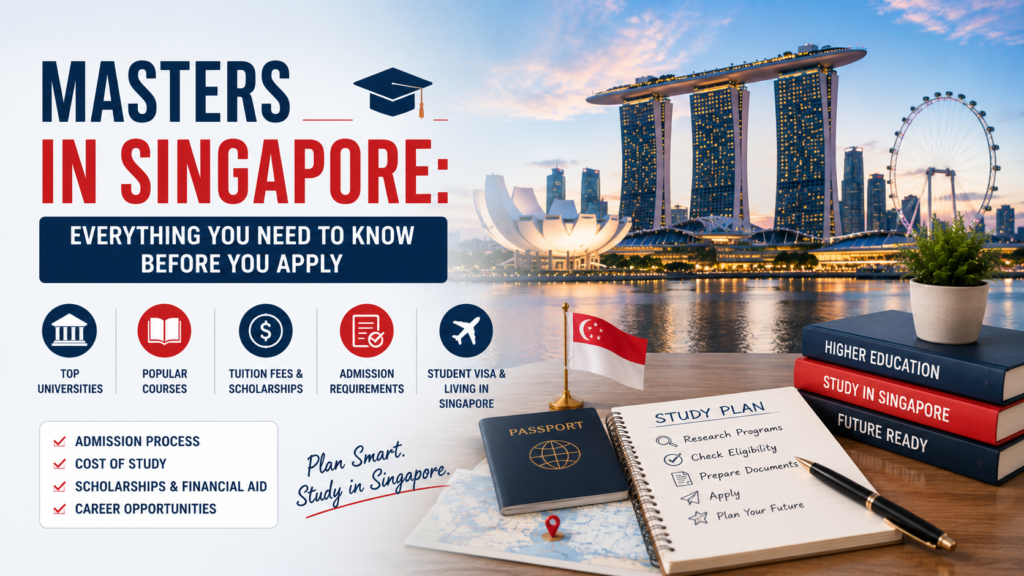
Pursuing Masters in Singapore has become a popular choice for students and working professionals seeking internationally recognised qualifications and better career opportunities. Singapore is known for its high-quality education system, modern learning environment, and strong connections with global industries, making it one of the top destinations for postgraduate studies in Asia.
Whether you want to specialise in business, engineering, healthcare, information technology, education, finance, or data science, Singapore offers a wide range of master’s programmes designed to meet the demands of today’s competitive job market.
Choosing the right postgraduate programme requires careful planning. Understanding admission requirements, tuition fees, scholarships, and career prospects can help students make informed decisions and achieve their academic goals.
Why Study Masters in Singapore?
Singapore has established itself as one of the world’s leading education and business hubs. Students benefit from high academic standards, practical learning, and exposure to international business environments.
Many postgraduate programmes combine classroom learning with research, industry projects, and practical applications that prepare graduates for real-world careers.
Some major benefits include:
- Globally recognised qualifications
- High-quality education standards
- Industry-focused curriculum
- Safe and modern living environment
- Strong employment opportunities
These advantages make Masters in Singapore an excellent investment for long-term career growth.
Internationally Recognised Qualifications
Graduates earn qualifications that are respected by employers and organisations around the world, creating opportunities for global career advancement.
Practical Learning Experience
Many master’s programmes include case studies, research projects, presentations, and industry collaborations that help students develop practical skills.
Popular Master’s Courses in Singapore
Students can choose postgraduate programmes across a wide range of disciplines.
| Study Area | Career Opportunities |
| Business Administration | Management, Consulting |
| Computer Science | Software Development, AI |
| Data Science | Analytics, Machine Learning |
| Engineering | Manufacturing, Construction |
| Finance | Banking, Investment |
| Public Health | Healthcare Management |
| Education | Teaching, Academic Leadership |
| Information Technology | Cybersecurity, Cloud Computing |
Selecting a programme aligned with your career objectives helps maximise the value of your postgraduate education.
Business and Management
Business-related master’s programmes prepare students for leadership, strategy, and organisational management roles.
Technology and Innovation
Growing demand for technology professionals has increased interest in data science, artificial intelligence, cybersecurity, and software engineering programmes.
Admission Requirements
Admission criteria differ depending on the programme and institution, but applicants generally need to meet several common requirements.
Typical requirements include:
- Bachelor’s degree from a recognised institution
- Academic transcripts
- Updated resume or CV
- Statement of purpose
- Letters of recommendation
- English language proficiency (where applicable)
- Passport and supporting documents for international students
Some specialised programmes may also require relevant work experience or interviews.
Study Options
Students can select the study mode that best fits their lifestyle and career goals.
| Study Mode | Best For |
| Full-Time | Recent graduates |
| Part-Time | Working professionals |
| Hybrid Learning | Flexible schedules |
| Research-Based | Academic and research careers |
Flexible learning options allow students to balance education with professional and personal responsibilities.
Full-Time Study
Ideal for students who want to complete their postgraduate qualification within a shorter timeframe.
Part-Time Study
Suitable for professionals who wish to continue working while pursuing higher education.
Tuition Fees and Living Costs
The cost of studying Masters in Singapore depends on the programme, study mode, and institution.
| Expense | Estimated Cost (SGD) |
| Tuition Fees | $20,000–$60,000+ |
| Accommodation | $800–$2,500/month |
| Food | $400–$700/month |
| Transportation | $100–$180/month |
| Miscellaneous | $200–$500/month |
Students should prepare a realistic financial plan before beginning their studies.
Scholarships and Financial Support
Many postgraduate students receive financial assistance through scholarships, grants, or bursaries.
Scholarships may include:
- Full tuition support
- Partial tuition assistance
- Monthly living allowance
- Research grants
- Merit-based awards
Applying early improves the chances of receiving financial support.
Career Opportunities After Graduation
Completing Masters in Singapore can significantly improve career prospects across multiple industries.
Graduates often pursue careers in:
- Business Management
- Finance
- Information Technology
- Engineering
- Healthcare
- Education
- Research
- Government Services
Many professionals also use a master’s degree to qualify for leadership positions or transition into specialised career paths.
Professional Growth
A postgraduate qualification demonstrates advanced expertise, critical thinking, and commitment to continuous learning.
Global Employment Opportunities
International employers value graduates who possess specialised knowledge and experience gained through postgraduate education.
How to Choose the Right Master’s Programme
Selecting the right programme requires more than comparing tuition fees.
Students should consider:
- Career goals
- Programme curriculum
- Faculty expertise
- Research opportunities
- Internship options
- Study flexibility
- Graduate employment outcomes
- Industry connections
Taking time to evaluate these factors helps students make a confident and informed decision.
Common Mistakes Students Should Avoid
Many applicants make avoidable mistakes during the admission process.
Common mistakes include:
- Applying close to application deadlines
- Choosing a programme without career planning
- Ignoring scholarship opportunities
- Underestimating living expenses
- Submitting incomplete documents
- Failing to research study options
Proper preparation improves both admission success and the overall postgraduate experience.
Final Takeaway
Choosing to pursue Masters in Singapore is a valuable investment in your future. With internationally recognised qualifications, modern learning facilities, flexible study options, and excellent career opportunities, Singapore continues to attract postgraduate students from around the world.
Before applying, compare programmes carefully, understand admission requirements, prepare your finances, and select a course that supports your long-term career ambitions. A well-planned postgraduate journey can open doors to new professional opportunities and personal growth.
1. How long does a master’s degree in Singapore take?
Most master’s programmes take 1 to 2 years to complete, while some part-time programmes may take up to 3 years.
2. Can international students study a master’s degree in Singapore?
Yes. Singapore welcomes international students who meet the admission requirements and obtain the necessary student visa or pass.
3. How much does it cost to study a master’s degree in Singapore?
Tuition fees generally range from SGD 20,000 to SGD 60,000 or more, depending on the programme and study mode.
4. Are scholarships available for master’s students?
Yes. Many postgraduate students are eligible for scholarships, grants, and financial aid based on academic performance, research potential, or other selection criteria.