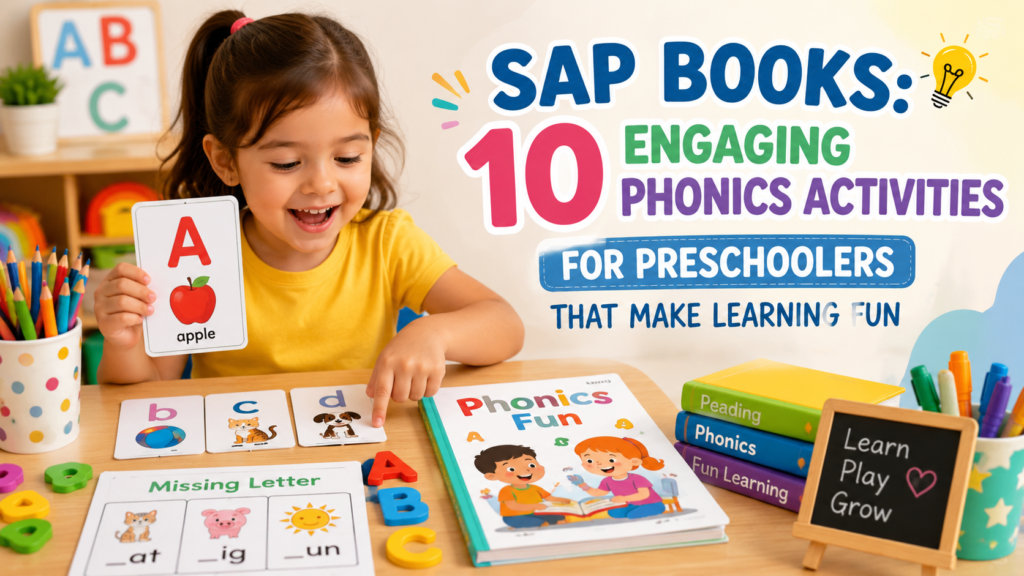
The preschool years are the perfect time to introduce children to the sounds that form the foundation of reading and communication. Young learners develop language skills most effectively through play, exploration, and interactive experiences rather than formal lessons alone. Incorporating phonics activities for preschoolers into everyday learning helps children recognise letter sounds, improve pronunciation, and build early reading confidence in an enjoyable way. With engaging educational books and creative activities, parents and teachers can create positive learning experiences that inspire curiosity while preparing children for future academic success.
Fun phonics learning encourages children to explore language naturally. As they listen, speak, sing, and play, they gradually develop stronger literacy skills that support reading, writing, and communication throughout their educational journey.
Key Takeaways
|
Why Phonics Is Important During Preschool
Phonics helps children understand the relationship between letters and sounds, providing the essential building blocks for reading and writing. Instead of memorising words, preschoolers learn how sounds combine to form simple words, making reading a more natural process.
Early exposure to phonics also strengthens listening skills, vocabulary development, and pronunciation. These abilities support classroom learning while making communication easier in everyday situations.
The benefits include:
- Stronger letter recognition
- Improved listening skills
- Better pronunciation
- Early reading confidence
- Expanded vocabulary
These foundational skills prepare children for a smooth transition into primary school learning.
Learning Through Play
Play-based learning allows preschoolers to explore sounds and letters naturally while maintaining curiosity and enthusiasm.
Building Confidence Early
Simple phonics activities encourage children to experience small successes that gradually build confidence in reading and speaking.
- Letter Sound Treasure Hunt
Children love exploring their surroundings, making treasure hunts an exciting way to reinforce letter sounds. Parents or teachers can hide picture cards or alphabet cards around a room and encourage children to find items beginning with a specific sound.
As children identify each object, they strengthen their ability to connect sounds with letters while developing observation and listening skills.
Making the Activity More Interactive
Ask children to say the letter sound aloud before collecting each matching picture or object.
Encouraging Vocabulary Growth
Introduce new words during the activity to expand language development while reinforcing phonics concepts.
- Alphabet Sound Matching Games
Matching games provide opportunities for children to connect letters with pictures representing beginning sounds. Using colourful cards keeps young learners engaged while strengthening sound recognition through repetition.
Children gradually become more confident identifying sounds because they receive immediate visual reinforcement after making correct matches.
This activity also improves memory, concentration, and early problem-solving skills.
| Activity | Learning Benefit |
| Letter matching | Sound recognition |
| Picture matching | Vocabulary development |
| Alphabet cards | Letter familiarity |
| Memory games | Improved concentration |
| Sorting activities | Observation skills |
Regular matching activities make phonics practice enjoyable while strengthening multiple early learning abilities.
Using Everyday Objects
Household items can easily become learning tools by matching them with their beginning letter sounds.
Keeping Sessions Short
Brief learning activities maintain children’s attention while preventing them from becoming overwhelmed.
- Singing Alphabet and Phonics Songs
Music makes learning memorable. Songs help preschoolers remember letter sounds more easily because rhythm and repetition naturally reinforce new information.
Children often enjoy singing together, allowing them to practise pronunciation while developing listening and speaking skills in a relaxed environment.
- Storytime with Sound Recognition
Reading storybooks together creates opportunities to highlight specific letter sounds while encouraging children to listen carefully.
Parents can pause during stories to identify words beginning with target sounds, helping children recognise phonics patterns naturally within meaningful language.
Asking Simple Questions
Encourage children to identify familiar sounds or repeat interesting words during the story.
Making Reading Interactive
Allow children to point at pictures and guess words beginning with specific sounds to increase participation.
- Build Simple Words with Letter Cards
Letter cards help preschoolers experiment with combining sounds to create short, simple words. By physically moving letters, children develop a clearer understanding of how sounds work together.
Hands-on activities strengthen both fine motor skills and early literacy while making phonics lessons enjoyable and interactive.
- Rhyming Word Challenges
Rhyming games help preschoolers recognise sound patterns while expanding their vocabulary. Children begin to notice that words with similar ending sounds often belong to the same word family, making it easier to develop early reading skills.
This enjoyable activity supports both phonics development and language confidence in a relaxed learning environment.
Start with Familiar Words
Choose simple words that children already know before introducing new vocabulary.
Celebrate Every Correct Answer
Positive encouragement keeps preschoolers motivated and excited about learning.
- Sound Sorting Activities
Sorting games encourage children to group pictures or objects according to their beginning sounds. Instead of focusing only on letter names, learners develop a stronger awareness of how words sound when spoken aloud.
Children enjoy handling colourful cards or classroom objects while discussing the sounds they hear. This hands-on approach strengthens observation, listening, and classification skills simultaneously.
- Phonics Craft Projects
Creative art activities make phonics lessons even more memorable. Children can decorate alphabet letters, create animal crafts linked to letter sounds, or build collages featuring objects beginning with specific sounds.
Combining creativity with literacy encourages children to associate positive experiences with learning. Craft activities also improve fine motor development while reinforcing early reading concepts.
Encourage Creativity
Allow children to personalise their artwork while discussing the sounds represented in each project.
Reinforce Learning Naturally
Review the featured letter sound again after completing each craft activity.
- Everyday Conversation Practice
Daily conversations provide valuable opportunities to reinforce phonics without creating formal lessons. Parents can encourage children to notice beginning sounds while talking about familiar objects, favourite foods, or daily routines.
Integrating phonics into everyday communication keeps learning enjoyable and relevant.
- Read Along with Educational Books
Reading together remains one of the most effective ways to strengthen early literacy skills. Educational books designed for preschool learners introduce simple vocabulary, repeated sound patterns, and engaging illustrations that encourage active participation.
Children who regularly read with parents or teachers gradually become more familiar with letter sounds, sentence structure, and storytelling while developing a lifelong interest in books.
Families can further strengthen early literacy by exploring Preschool Books, which provide engaging activities that support phonics, vocabulary development, early reading, and school readiness.
Choose Age-Appropriate Books
Books with colourful illustrations, simple sentences, and repetitive sound patterns maintain children’s attention and support steady learning.
Read Together Every Day
Even 10 to 15 minutes of shared reading each day can make a meaningful difference in language development.
Choosing the Right Educational Books for Preschool Learners
Educational books play an important role in supporting phonics instruction by providing structured learning experiences that complement everyday activities. Well-designed books introduce new sounds gradually while reinforcing previous learning through engaging exercises and colourful illustrations.
Quality preschool books also support independent exploration, allowing children to revisit familiar sounds and vocabulary with growing confidence.
| Feature | Benefit |
| Colourful illustrations | Maintains attention |
| Progressive phonics lessons | Builds confidence gradually |
| Interactive activities | Encourages active participation |
| Simple vocabulary | Supports early reading |
| Practice exercises | Reinforces learning |
Final Takeaway
Early phonics learning provides children with the skills they need to become confident readers, effective communicators, and enthusiastic learners. By combining interactive activities, daily conversations, educational books, and positive encouragement, parents and teachers can create enjoyable learning experiences that build strong literacy foundations.
Purchase educational books at sapgrp.com and discover trusted learning resources that help preschool children develop strong phonics skills while making learning enjoyable every day.
Frequently Asked Questions
- Why are phonics activities important for preschool children?
Phonics activities help children recognise letter sounds, improve pronunciation, and develop the foundational skills needed for reading and writing. Early exposure to phonics also strengthens listening, vocabulary, and communication abilities.
- How often should preschoolers practise phonics?
Short daily practice sessions are generally more effective than long lessons because young children learn best through regular repetition. Consistent practice keeps learning enjoyable while reinforcing letter-sound relationships.
- What types of books are best for preschool phonics learning?
Books with colourful illustrations, simple vocabulary, repetitive sound patterns, and interactive activities encourage children to participate actively. Age-appropriate educational books help build confidence while making reading enjoyable.
- Can parents teach phonics successfully at home?
Yes. Parents can support phonics learning through reading together, singing songs, playing sound games, and encouraging everyday conversations. Creating a positive learning environment helps children develop confidence and enjoy practising new skills.
- What should parents look for when choosing phonics books for preschoolers?
Parents should choose books with age-appropriate vocabulary, colourful illustrations, interactive activities, and a gradual introduction to letter sounds. Resources that encourage participation through games, stories, and simple exercises help children develop confidence while making early reading enjoyable.