 By Admin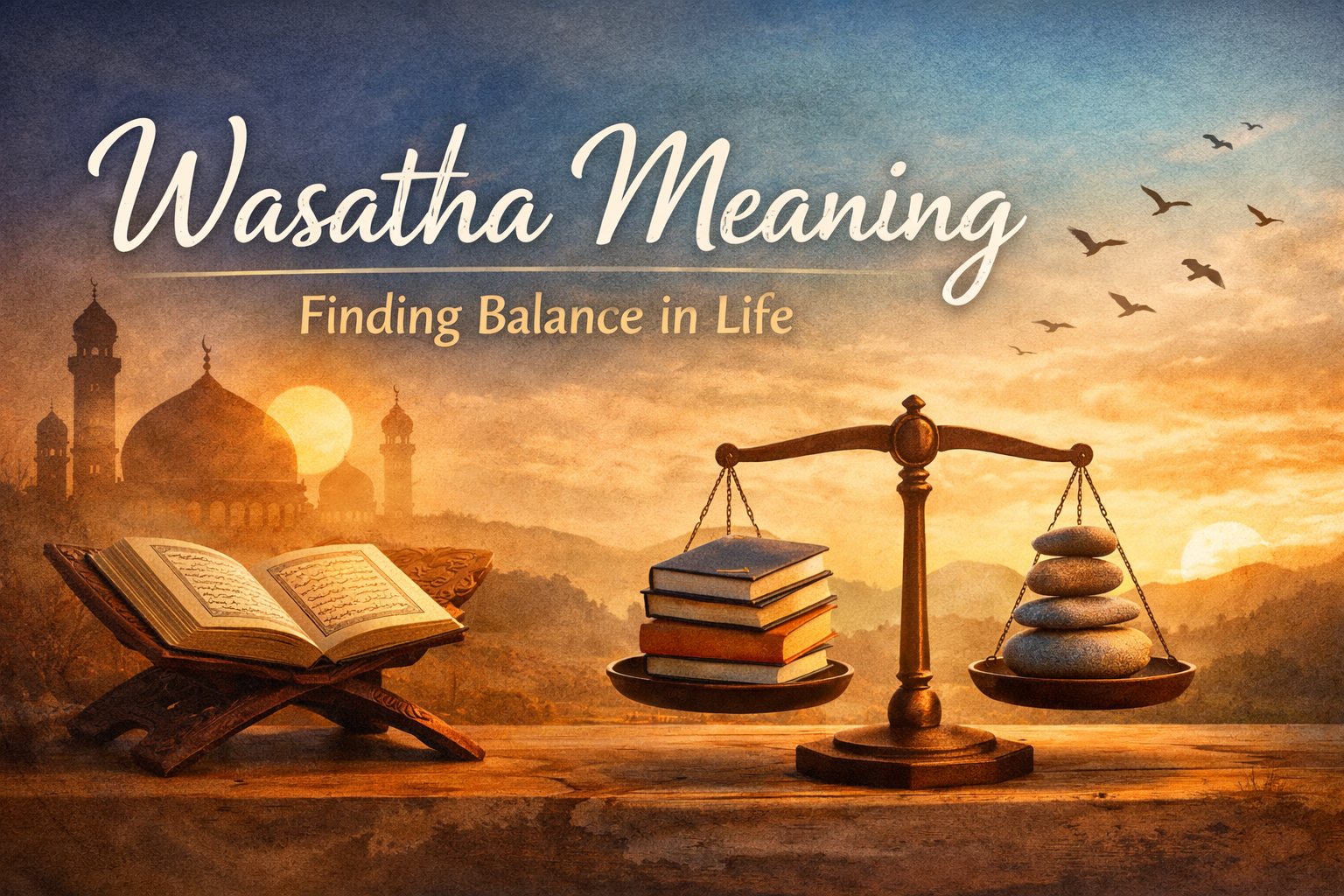
Some words don’t need to be loud to feel important.
Wasatha is one of them.
At first glance, it may seem like just another unfamiliar term. But once you look a little closer, the meaning starts to settle in. Wasatha is usually understood as the idea of balance, fairness, and staying away from extremes. Not cold balance. Not lifeless balance. More like a steady, sensible way of living when everything around you keeps pushing people too far in one direction or the other.
And honestly, that makes the word feel very current.
What Does Wasatha Mean?
In simple words, wasatha points to the middle path.
Not the lazy middle. Not the confused middle. The wise middle.
People often connect the word with ideas like:
- moderation
- fairness
- justice
- self-control
- balance in thoughts and actions
- avoiding excess
So when someone talks about wasatha, they are not usually talking about being ordinary or weak. They are talking about living in a measured way. A way that avoids going overboard. A way that keeps a person grounded.
Wasatha in Plain Language
Sometimes a table makes things easier, especially with a word like this.
| Word | Simple meaning | What it suggests |
|---|---|---|
| Wasatha | middle or balance | staying centered |
| Wasat | middle point | avoiding extremes |
| Wasatiyyah | moderation | a balanced lifestyle |
That’s the core of it.
Simple on paper… deeper in real life.
Because balance is easy to praise, but harder to practice.
Why Wasatha Still Matters
This word matters because people rarely stay in balance for long.
They swing. They react. They overdo things.
You see it everywhere:
- in arguments
- in religion
- in work culture
- in spending habits
- in parenting
- in social media
- in the way people judge others
One side becomes too hard. The other becomes too loose. Then both sides think they are right. And somewhere between all that noise, wasatha quietly reminds people that there is another way.
A calmer way. A fairer way.
Wasatha Is Not About Being Weak
This part is important because many people get it wrong.
They hear words like “balance” or “moderation” and think, “Oh, so it means not taking anything seriously.”
But no. That’s not really it.
Wasatha does not mean:
- having no principles
- agreeing with everything
- avoiding truth to keep people happy
- becoming passive
- lowering standards just to seem soft
Instead, it means carrying your values without becoming extreme. That’s different. Very different, actually.
A balanced person can still be firm.
A fair person can still say no.
A moderate person can still stand for something.
What Wasatha Looks Like in Real Life
This is where the word starts feeling useful instead of just interesting.
Because if a word can’t touch daily life, people forget it.
Here are a few ordinary examples of wasatha:
- At work: doing your job well without letting work eat your whole life
- At home: being kind, but also setting healthy limits
- With money: spending wisely without becoming stingy or reckless
- In faith: staying committed without turning harsh or judgmental
- In speech: speaking honestly without trying to wound people
That’s what makes wasatha feel practical. It doesn’t belong only in books or lectures. It shows up in routines. Choices. Reactions. Even in tone.
And maybe that’s why it lasts as an idea. It fits everyday mess.
A Few Signs You’re Missing Wasatha
Sometimes people understand a word better by seeing its opposite.
So here’s the other side of it.
You may be drifting away from wasatha when:
- every disagreement becomes personal
- every mistake feels unforgivable
- rest starts feeling like guilt
- discipline turns into harshness
- freedom turns into carelessness
- confidence turns into arrogance
That drift can happen slowly. Most of the time, it does.
Nobody wakes up and says, “Today I’ll become extreme.”
It usually starts smaller than that.
Why Balance Feels So Hard
Because people are emotional. Tired. Stressed. Proud sometimes. Hurt too.
And extremes can feel powerful in the moment.
Being too harsh can feel like strength.
Being too loose can feel like freedom.
But both can cost a person more than they notice at first.
Wasatha asks for something harder: steadiness.
Not perfection. Just steadiness.
That means giving each part of life its proper place:
- faith, without neglecting people
- work, without losing peace
- ambition, without greed
- kindness, without foolishness
- boundaries, without cruelty
That kind of balance takes thought. And effort. And, honestly, some maturity.
Why So Many People Connect With This Idea
Because deep down, most people already know extremes are exhausting.
Too much pressure breaks people. Too much carelessness breaks things too.
Wasatha feels different. It feels breathable.
It leaves space for:
- responsibility
- mercy
- discipline
- fairness
- patience
- common sense
Not glamorous words, maybe. But strong ones.
And in real life, those qualities usually matter more than dramatic ones.
Final Thoughts
Wasatha is a small word, but it carries a big message. It points to balance, fairness, moderation, and a life that does not lean too far into excess. Not because passion is bad. Not because strong values are wrong. But because extremes often damage what balance protects.
That’s the heart of it.
In a loud world, wasatha feels almost quiet. But quiet in a good way. Steady. Clear. Human. It reminds us that the best path is not always the most intense one. Sometimes it is the most measured one. The one with fairness in it. The one with restraint. The one that leaves room for both truth and mercy.
And maybe that is why this word keeps meaning something to people.
Because balance never really goes out of date.
Want to read more like this? Check out erectn for more interesting articles.