 By Admin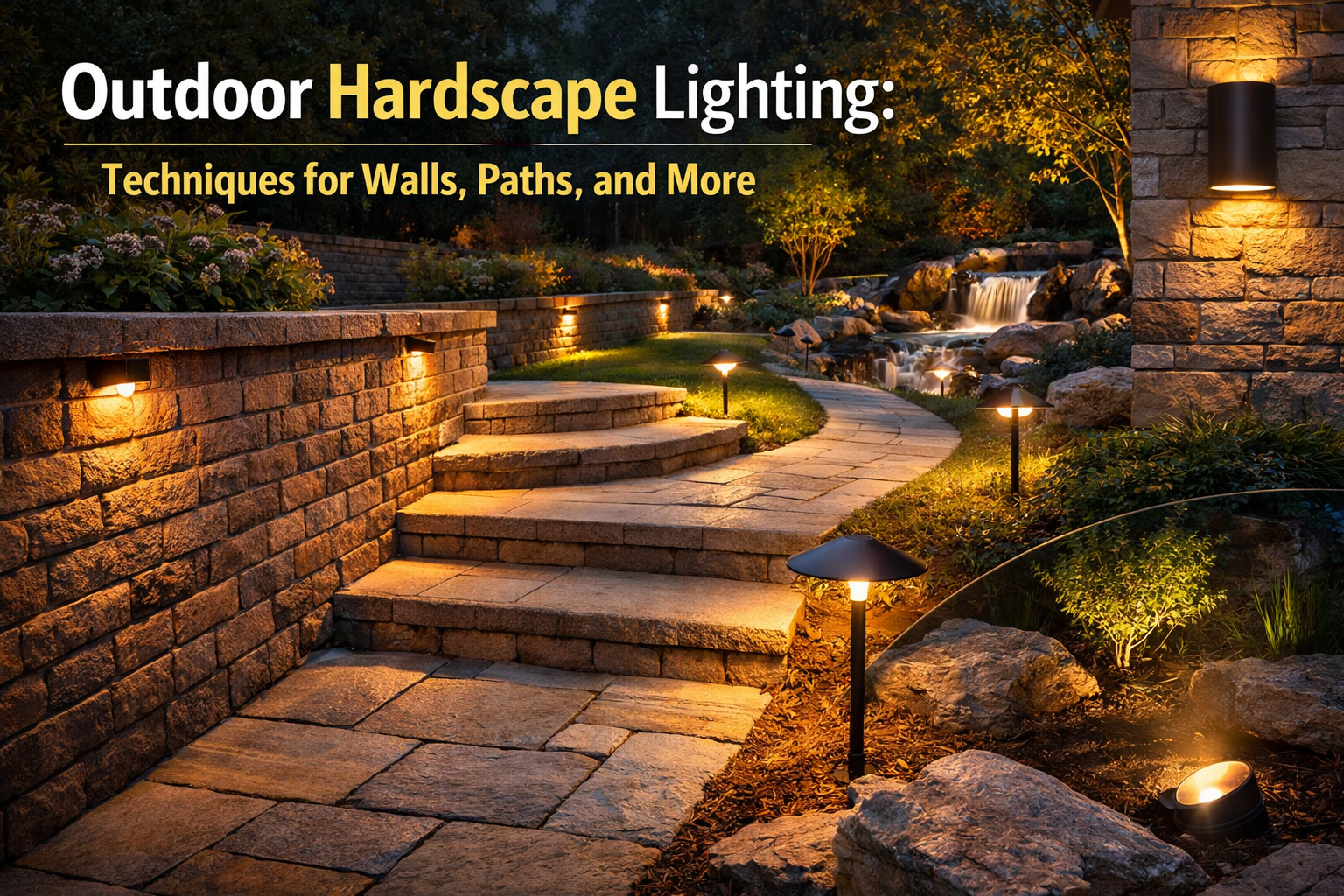
Hardscape lighting encompasses one of the broadest ranges of applications in the outdoor lighting world — from illuminating a single garden wall to creating a complete lighting design for an extensive terrace, staircase, and retaining wall system. outdoor lights for brick walls from Sunbright Lighting is the common thread that connects these applications: fixtures designed to illuminate the built elements of a landscape.
The Visual Hierarchy of Hardscape Lighting
Every hardscape lighting design benefits from a visual hierarchy — a deliberate ordering of which elements are brightest, which are dimmer, and which remain unlit. Without hierarchy, a uniformly lit hardscape lacks drama and visual interest. With thoughtful hierarchy, the eye is guided through the landscape in a deliberate sequence that reveals the design logic.
Primary elements in this hierarchy are typically: the most prominent vertical surfaces (main retaining walls, feature walls, entry steps), the most important horizontal surfaces (main terrace, primary path), and any architectural features of particular quality or significance (archways, garden structures, water features). These receive the most light.
Secondary elements — lower retaining walls, secondary steps, path edging — receive less light. Tertiary elements — decorative details, planting pockets, secondary paths — receive only accent lighting or none at all.
Path Lighting as a Hardscape Element
outdoor lights for brick walls that illuminate paths are a fundamental part of hardscape lighting because paths themselves are hardscape elements — constructed surfaces that define movement through the landscape. Path lighting that is designed in concert with the hardscape lighting scheme, rather than independently, creates a more coherent result.
Specifically, path fixtures should illuminate the path surface in a way that reads consistently with the adjacent hardscape lighting. If the retaining wall beside the path is illuminated with warm white grazing light, the path lights beside it should use the same colour temperature and similar intensity so the path and wall read as part of the same design rather than independent elements.
For homeowners pairing outdoor lights for brick walls with outdoor well light from Kings Outdoor Lighting for in-ground well lights that provide uplighting at specific points within the hardscape design, the consistent use of 2700K to 3000K colour temperature throughout all hardscape lighting elements — path lights, wall lights, and well lights — creates a unified, warm atmosphere across the entire hardscaped area.
Moisture Management in Hardscape Lighting
Hardscape lighting fixtures — particularly those installed in or against masonry — are exposed to moisture from multiple sources: rain falling directly on the fixture, rain running down adjacent wall surfaces, condensation forming on the fixture in high-humidity conditions, and irrigation water reaching the fixture from adjacent planting.
All hardscape fixtures should carry at minimum IP65 ratings. Fixtures installed against wall faces where rain runoff will contact them should carry IP67. Proper fixture orientation — ensuring that lens faces are not horizontal or upward-facing where water can pool — reduces moisture contact regardless of IP rating.
For homeowners completing their hardscape lighting with 120V non-metal and ceramic sconces that add distinctive architectural character to adjacent garden walls, 120V Non-Metal/Ceramic Sconce from Kings Outdoor Lighting provides unique exterior sconce designs that stand apart from standard metal fixtures and create memorable architectural moments in the lit landscape.