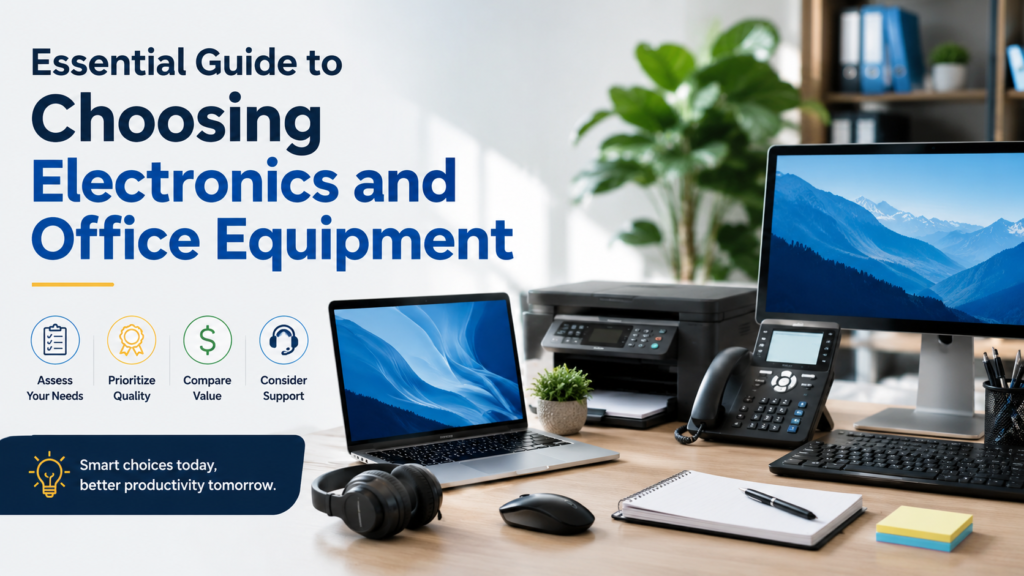
In today’s fast-paced world, technology has become the engine driving both personal life and business success. From daily communication and data management to securing sensitive information and fostering innovation, a robust and reliable IT infrastructure is no longer a luxury but a fundamental necessity. However, with the constant evolution of the market and the emergence of new innovations, choosing the right equipment can be an overwhelming task. The correct decision not only optimizes productivity and efficiency but also represents a smart long-term investment, adapting to the changing needs of users and businesses.
For consumers and professionals, access to a wide range of technological products is essential. Whether it’s a high-performance laptop for a student, a multifunctional printer for a small business, or cutting-edge audio equipment for an enthusiast, quality and variety are key. Platforms like PCredCom offer an extensive catalog of computers, laptops, hardware, projectors, radio communication equipment, and much more, making it easier to find the perfect device. When exploring these options, it is crucial to consider not only the technical specifications but also how the equipment integrates into the user’s digital ecosystem and contributes to their specific goals.
Digital Transformation and Its Impact on Electronic Consumption
Digital transformation has redefined how we live, work, and entertain ourselves. This phenomenon, accelerated by technological advancements and changes in consumption habits, has driven an unprecedented demand for more powerful, versatile, and connected electronic devices. This trend is evident in a sustained growth of e-commerce and increased adoption of emerging technologies, from artificial intelligence to the Internet of Things (IoT).
For users, this means a wider offering and the need to make informed decisions. Businesses, on the other hand, must equip their employees with tools that allow them to be competitive in an increasingly digitized environment. The choice of laptops with the latest generation processors, printers with advanced network capabilities, and high-definition projectors becomes essential to maintain operational efficiency and foster innovation. The key is to identify technological solutions that not only meet current needs but are also prepared for future challenges.
Laptops: The Hub of Mobile Productivity
The laptop remains the central device for productivity, for both professionals and students. The evolution of laptops has been impressive, now offering a balance between power, portability, and battery life. When choosing a laptop, it is essential to consider its primary use. For basic tasks like web browsing and word processing, a model with an Intel Core i3 or AMD Ryzen 3 processor and 8 GB of RAM may suffice.
However, for professionals working with graphic design software, video editing, or data analysis, an Intel Core i5/i7 or AMD Ryzen 5/7 processor, along with 16 GB of RAM or more, is recommended. Storage is also crucial; solid-state drives (SSDs) offer significantly faster boot and application loading speeds than traditional hard disk drives (HDDs). Additionally, features such as screen quality, battery life, and connectivity (USB-C ports, HDMI) are important aspects to evaluate to ensure an optimal user experience. The operating system choice, whether Windows, macOS, or Linux, also plays a significant role, impacting software compatibility and user interface preferences. For business users, features like enhanced security, remote management capabilities, and robust build quality are often prioritized to ensure reliability and data protection.
Printers and Projectors: Essential Office Tools
Although digitalization is advancing, printers and projectors remain indispensable tools in many office and educational environments. Modern printers offer a variety of functions, from high-quality color printing to multifunctional capabilities that include scanning, copying, and faxing. When selecting a printer, it is important to consider print volume, cost per page, and specific needs (e.g., duplex printing, wireless connectivity). Laser printers are often preferred for high-volume text printing due to their speed and lower cost per page, while inkjet printers excel in producing high-quality color graphics and photos.
Projectors, for their part, are fundamental for presentations, meetings, and classrooms. Advances in projection technology have led to models with higher brightness (lumens), better resolution (Full HD, 4K), and longer lamp life. Portable and ultra-short-throw projectors offer flexibility for different spaces and needs. Connectivity, including HDMI and USB ports, as well as the ability to project wirelessly, are key features to look for seamless integration with other devices. The type of projection technology, such as DLP or LCD, can also influence image quality and color accuracy, making it an important consideration for specific applications.
Audio Equipment: Quality Sound for Work and Entertainment
Audio quality is an often-underestimated but crucial component in the technological environment. Whether for clear video conferences, multimedia content editing, or simply enjoying high-fidelity music, having the right audio equipment significantly enhances the user experience. This includes everything from professional-quality headphones and microphones to surround sound systems and studio equipment. The rise of remote work and online collaboration has further amplified the need for reliable and high-quality audio solutions.
For professionals who make many calls or recordings, noise-canceling headphones and a high-sensitivity microphone are essential to ensure clear communication and minimize distractions. Audio enthusiasts can look for studio monitor speakers for accurate sound reproduction or home theater systems for an immersive experience. The connectivity options, such as Bluetooth, USB, and Wi-Fi, offer versatility, allowing integration with a wide range of devices. Furthermore, considerations like impedance, frequency response, and driver size are important for audiophiles seeking the best possible sound fidelity. Investing in good audio equipment not only improves work quality but also enriches leisure time, providing a more engaging and enjoyable experience.
Components and Accessories: Optimizing Performance
Beyond the main devices, components and accessories play a vital role in optimizing the performance and functionality of any technological setup. This includes external storage units (SSDs, HDDs), which provide additional space and data backups, as well as peripherals such as ergonomic keyboards, precision mice, and high-resolution monitors that improve comfort and productivity. The right accessories can transform a basic setup into a highly efficient workstation.
For laptop users, accessories such as cooling pads, USB-C hubs, and external batteries can extend device life and functionality, especially for those who travel frequently or work in demanding environments. In the field of radio communication, specialized antennas, robust chargers, and advanced programming software are essential for keeping equipment operational and ensuring reliable communication. The choice of quality accessories not only protects hardware investment but also customizes the technological experience, adapting it to the user’s individual preferences and needs, ultimately enhancing overall user satisfaction and efficiency.
The Importance of Cybersecurity in the Electronic Ecosystem
With the increasing interconnection of devices and the digitalization of information, cybersecurity has become a paramount concern. Protecting personal and business data from threats such as malware, phishing, and ransomware attacks is more critical than ever. Investing in robust antivirus software, firewalls, and data backup solutions is fundamental to safeguarding sensitive information. The sophistication of cyber threats continues to grow, making a multi-layered security approach indispensable.
Furthermore, implementing good cybersecurity practices, such as using strong and unique passwords, two-factor authentication, and education about common threats, is essential for all users. For businesses, this extends to employee training, regular system auditing, and compliance with data protection regulations like GDPR or local privacy laws. A proactive approach to cybersecurity not only protects against financial and reputational losses but also fosters trust in the use of technology, ensuring business continuity and customer confidence.
Technological Trends for 2026
The technology market is constantly evolving, driven by consumer demand and investment in digital infrastructure. For 2026, several key trends are expected to shape the landscape. The adoption of artificial intelligence (AI) in consumer devices and office software will continue to grow, offering more personalized and automated experiences, from smart assistants to predictive analytics in business applications. Augmented reality (AR) and virtual reality (VR) will also see greater integration in sectors such as entertainment, education, and e-commerce, creating more immersive and interactive user experiences.
The growth of e-commerce will remain a dominant force, with greater sophistication in purchasing and delivery platforms, including personalized shopping experiences and faster logistics. The demand for connected devices, part of the IoT ecosystem, will expand significantly, from smart homes and wearable technology to industrial IoT applications in manufacturing and logistics. Additionally, sustainability and energy efficiency will become increasingly important factors in the purchasing decision for electronic products, with consumers and businesses seeking greener and more durable options. These trends will shape the future of electronic consumption, offering new opportunities and challenges for both users and providers.
Tips for Smart Electronics Purchasing
Making a smart purchase of electronic and office equipment involves more than just comparing prices. It is essential to thoroughly research the product, read user and expert reviews, and compare technical specifications relevant to your needs. Considering brand reputation and the availability of reliable technical support and warranty is equally important, as this can significantly influence the long-term experience and value of your investment.
Furthermore, it is advisable to set a clear budget and stick to it, avoiding impulsive purchases that may not align with your actual requirements. Evaluating the compatibility of new equipment with existing devices and software you already use is crucial for seamless integration and to avoid unexpected compatibility issues. Finally, thinking about the scalability and lifespan of the product can help make a decision that not only meets current needs but also adapts to future demands, thus maximizing the value of the investment and reducing the need for frequent upgrades.
The Importance of After-Sales Support and Warranties
When investing in electronics and office equipment, the purchase price is only one part of the equation. The quality of after-sales support and the warranty offered by the manufacturer or retailer are equally, if not more, important. A robust warranty provides peace of mind, protecting your investment against manufacturing defects and unexpected malfunctions. Understanding the terms and duration of the warranty is crucial before making a purchase.
Beyond the warranty, accessible and efficient customer support can make a significant difference in your overall experience. Whether you encounter technical issues, need assistance with setup, or have questions about product features, reliable support ensures that problems are resolved quickly, minimizing downtime and frustration. Look for companies that offer multiple support channels, such as phone, email, and live chat, and have a reputation for excellent customer service. This commitment to after-sales care reflects a company’s dedication to its customers and the quality of its products, ensuring a positive and long-lasting relationship with your technology.
Conclusion: Technology as a Strategic Ally
In summary, the choice of electronic and office equipment is a strategic decision that directly impacts the productivity, efficiency, and security of individuals and businesses. In a dynamic market, driven by digital transformation and emerging trends, having a reliable provider that offers a wide range of quality products is essential. From laptops and printers to audio equipment and accessories, each component plays a crucial role in building a robust technological ecosystem.
By prioritizing research, cybersecurity, and adaptability to future trends, consumers and professionals can ensure that their technological investments not only meet their current needs but also prepare them for long-term success. To explore the latest innovations and find the perfect equipment to boost your productivity and entertainment, visit pcredcom.com. Technology, when chosen wisely, becomes a powerful ally in achieving personal and business goals.