 By Admin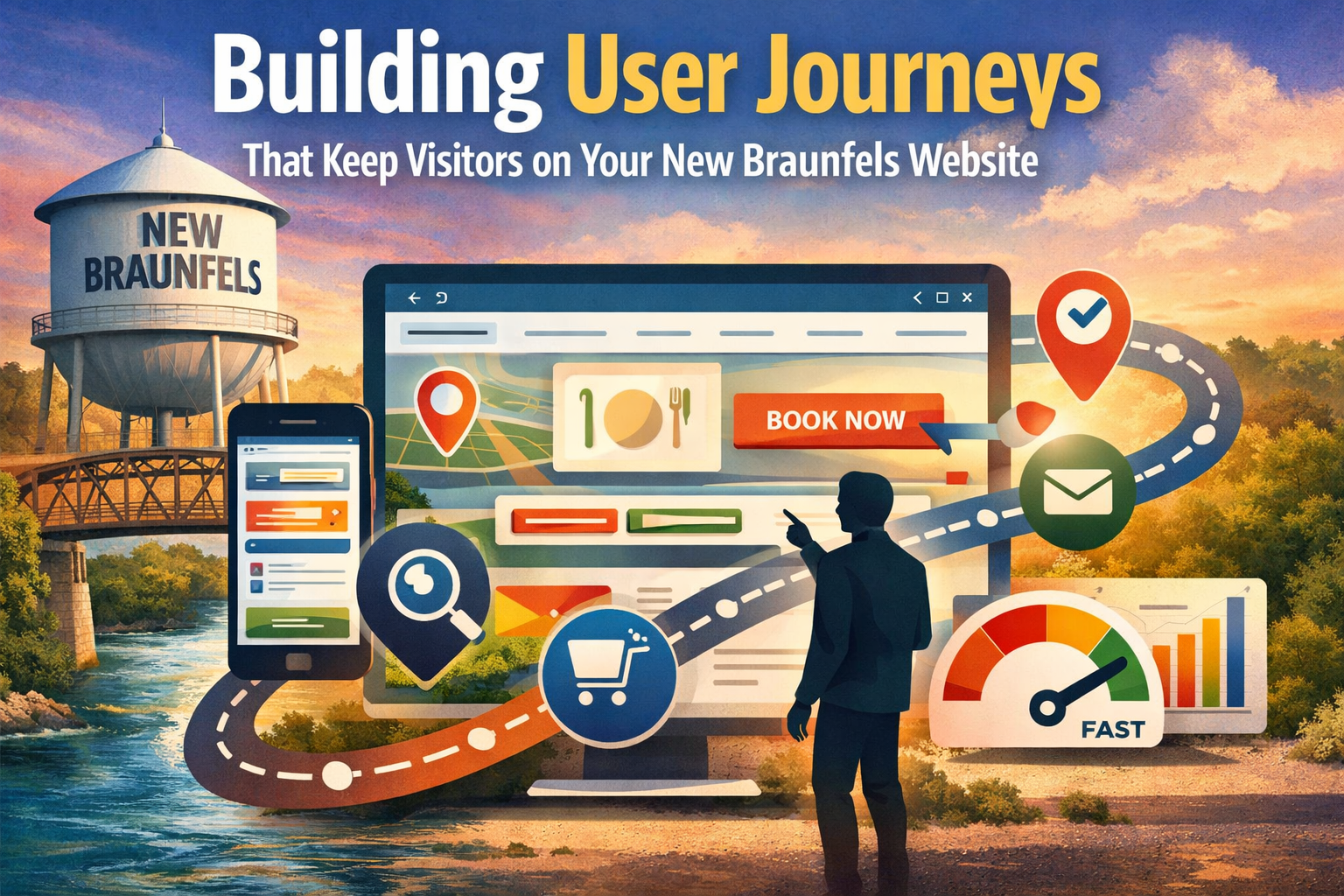
New Braunfels is growing fast. The Comal County area has been one of the fastest-expanding regions in Texas for several years running, and that growth has brought more competition for local businesses across every industry. With more options available to consumers, your website can’t just exist. It has to work.
That’s where user journey design comes in. Businesses investing in quality New Braunfels web design from Texas Web Design understand that every click, scroll, and page transition either builds momentum toward a conversion or sends a visitor elsewhere. Knowing how to shape that path matters more than most business owners realize.
What Is a User Journey and Why Does It Affect Time on Page?
A user journey is the sequence of steps a visitor takes from the moment they land on your site to the moment they leave, or convert. Every page they visit, every link they click, every form they skip is a data point in that journey. Research from Forrester, cited by Webflow, has found that sites with well-designed user journeys can achieve up to 200 percent higher visit-to-order conversion rates compared to sites with poor UX.
Time on page is one of the clearest signals of engagement. When visitors stay longer, they’re consuming your content, building trust in your brand, and moving closer to a decision. When they leave in seconds, something in the journey broke down.
What Makes Visitors Leave Quickly?
- Slow load times: According to Akamai, a one-second delay in page response can reduce conversions by 7 percent.
- Unclear navigation: If visitors can’t figure out where to go within a few seconds, they leave.
- Mismatched content: When a landing page doesn’t match what visitors expected from a search result or ad, they bounce right away.
- Poor mobile experience: If the site doesn’t display properly on a phone, the session ends fast.
How Do You Map a User Journey for a Local Business Website?
Mapping a user journey starts with understanding who your visitors are and what they need. A New Braunfels restaurant visitor is looking for hours, a menu, and directions. A plumbing company visitor wants to know if you serve their neighborhood and how to reach someone fast. Those are completely different journeys, and they need to be designed that way.
Define Your Website Goals First
Before any design decisions are made, get clear on what actions you want visitors to take. Calling your business. Filling out a contact form. Booking a service. These are your conversion points. Every page, every content block, and every CTA should point in that direction with as little friction as possible.
Build Content Around Intent Stages
Visitors arrive at your site in different mental states. Some are just researching options (awareness stage). Others are comparing specific providers (consideration stage). A few are ready to book right now (decision stage). A well-mapped user journey serves all three groups without making anyone wade through content that isn’t meant for them.
For a New Braunfels service business, this might mean having a homepage that answers “can you help me?” quickly, service pages that answer “how exactly?” in more detail, and a contact page that removes every possible barrier to reaching out.
Use Internal Linking as a Journey Guide
Internal links aren’t just good for SEO. They guide visitors from one page to the next. A blog post about local services can link to a service page. A service page can link to a project gallery. That gallery can link to a contact form. Each link moves the visitor forward intentionally. Without these connectors, visitors hit a dead end and leave.
What Page Elements Keep Visitors on Your Site Longer?
Once the structure of the journey is solid, the individual page elements either reinforce engagement or interrupt it. This is where layout decisions start to matter a lot.
Visual Hierarchy and Scannable Content
Most visitors don’t read websites. They scan them. Short paragraphs, clear headings, and bullet points let someone extract value from a page in seconds. That quick win builds enough trust to keep them clicking. Long, unbroken blocks of text signal effort, and most visitors won’t invest it.
Strategic CTAs at Natural Decision Points
Calls to action placed only at the bottom of a page catch visitors who made it that far and no one else. Placing CTAs at natural decision points, after a key benefit, after a customer testimonial, after answering a common question, catches visitors at the moment they’re most likely to act.
Mobile-First Layout
In a city like New Braunfels where residents are often on the move near the Guadalupe River, around Canyon Lake, or commuting on IH-35, mobile optimization is not something to treat as an afterthought. If a site loads slowly or displays awkwardly on a phone, visitors won’t stay. A mobile-first layout built for how people in this market actually browse makes a real difference in session length and what people do while they’re there.
What Does This Mean for Your New Braunfels Business?
Time on page isn’t a vanity metric. It reflects whether your website is doing its job: communicating clearly, building trust, and guiding visitors toward the action you need them to take. In a competitive and growing market like New Braunfels, businesses that design intentional user journeys consistently outperform those that don’t.
The good news is this doesn’t always require a full rebuild. Better internal linking, cleaner navigation, faster load times, and more strategic CTA placement can all move the needle. Start by looking at your current site through the eyes of someone who knows nothing about your business. If the path from landing page to contacting you isn’t obvious within three clicks, there’s work to do.
Frequently Asked Questions
What is a user journey in web design?
A user journey is the sequence of actions and decisions a visitor makes from the moment they land on your site to the point where they convert or leave. Mapping this journey helps businesses identify where visitors get stuck or disengage and fix those gaps.
How does time on page affect SEO?
Time on page signals to search engines that your content is relevant and useful to visitors. Sites where visitors stay longer and visit multiple pages tend to rank better because they demonstrate genuine engagement rather than quick exits.
What causes high bounce rates on local business websites?
High bounce rates are commonly caused by slow load times, content that doesn’t match visitor expectations, poor mobile experience, or unclear navigation. Fixing these issues often leads to quick improvements in engagement metrics.
How many clicks should it take a visitor to contact a New Braunfels business?
A good rule of thumb is three clicks or fewer. If a visitor can’t find your phone number, contact form, or service booking page within three clicks from any page, that friction is worth addressing.
What is internal linking and why does it matter for user journeys?
Internal links connect pages within your website, guiding visitors from informational content toward conversion pages. They also help search engines discover and index your content, supporting your overall search rankings.
What role does mobile design play in keeping visitors on your site?
Most local searches happen on mobile devices. A site that doesn’t load quickly or display correctly on phones will lose a large portion of its visitors within the first few seconds. Mobile-first design prioritizes this audience from the start.
How do you measure user journey performance?
Tools like Google Analytics track metrics such as session duration, pages per session, and bounce rate. Heatmap tools like Hotjar or Microsoft Clarity show exactly where visitors click, scroll, and drop off, giving you precise data to improve specific pages.
What is the difference between a user journey and a user flow?
A user journey maps the broader experience, including emotional context and decision stages, while a user flow is a more technical representation of the specific steps taken through a digital interface. Both are useful when planning or redesigning a website.