
 By Osman Blake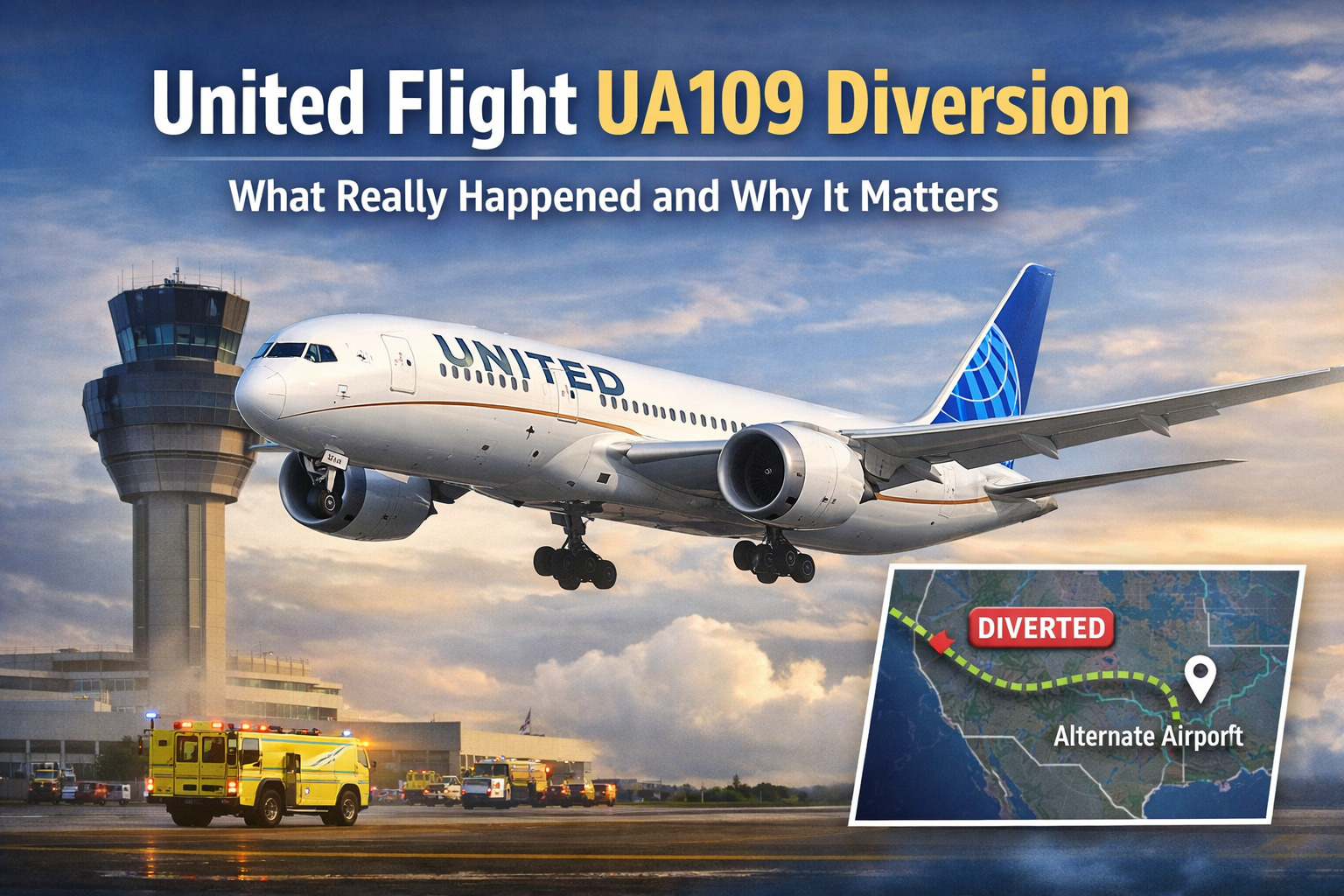
When people search for United Flight UA109 diversion, they’re usually trying to answer one simple question: what actually happened?
Flight diversions always create curiosity. Sometimes worry. And honestly… a lot of confusion. Aviation decisions can feel mysterious from the outside, especially when you’re the one sitting in seat 24A watching the map suddenly change.
So let’s slow things down and walk through what a diversion like UA109 typically means, why airlines make this call, and what passengers usually experience when a flight changes course mid‑journey.
What Is a Flight Diversion?
A flight diversion happens when an aircraft that was scheduled to land at one airport instead lands at a different airport.
Simple definition — but the reasons behind it can be complex.
Diversions are not rare, and most of the time they are precautionary, not dangerous. Airlines and pilots are trained to prioritize safety above schedules, costs, or convenience. Always.
Quick Snapshot: United Flight UA109
Below is a general overview of what people usually want to know about the UA109 diversion situation.
| Detail | Information |
|---|---|
| Flight Number | UA109 |
| Airline | United Airlines |
| Event Type | Mid‑flight diversion |
| Typical Cause Categories | Medical, technical, weather, or operational |
| Safety Outcome | Diversions are usually precautionary |
| Passenger Impact | Delay and possible rebooking |
Note: Airlines sometimes limit public details, so early reports can vary or evolve.
Most Likely Reasons Flights Like UA109 Get Diverted
Here’s the thing… flights don’t just randomly change direction. There is always a reason — and usually a very practical one.
Common diversion triggers include:
-
Medical emergency onboard
-
Mechanical or technical warning
-
Severe weather at destination
-
Air traffic congestion
-
Security concern
-
Fuel planning adjustments
-
Crew duty time limits
And yes — medical situations are actually one of the most common causes of sudden diversions worldwide.
What Happened With United Flight UA109?
While specific real-time details can vary depending on the incident report, flights like UA109 are typically diverted as a precautionary safety decision.
In many similar cases across the industry:
-
The aircraft remains fully controllable
-
Passengers are safe throughout
-
The diversion is done out of caution
-
Emergency services may meet the plane (standard procedure)
And sometimes the situation sounds more dramatic online than it actually was in the cockpit.
But… that’s the internet for you.
What Passengers Usually Experience During a Diversion
If you’ve never been on a diverted flight, it can feel unsettling. The map changes. The crew makes an announcement. People start looking around.
Here’s the typical passenger experience.
In‑flight signs of a diversion:
-
Pilot announcement about route change
-
Slight adjustment in flight path
-
Possible faster descent
-
Cabin crew preparing the cabin earlier than expected
-
Emergency vehicles visible on landing (often precautionary)
And honestly? Most diversions are calm and orderly.
No drama. No chaos. Just aviation professionals doing their job.
Why Airlines Choose to Divert (Even When It Seems Minor)
This is important.
Modern aviation operates on a “better safe than sorry” philosophy. If something even slightly questionable appears — a sensor alert, a passenger health issue, weather uncertainty — pilots are trained to act early.
Because waiting can turn a small issue into a bigger one.
Safety-first decision making means:
-
Early action reduces risk
-
Extra caution is encouraged
-
Diversions are not considered failures
-
Passenger safety always comes first
And yes… sometimes it feels inconvenient. But it’s exactly what you want pilots to do.
How Often Do United Flights Get Diverted?
Not very often.
Commercial aviation diversion rates are actually quite low compared to the number of flights that operate daily. Millions of flights land exactly where planned every year.
But when one does divert — like UA109 — it gets attention fast.
Why?
Because:
-
Flight tracking apps are popular
-
Social media spreads alerts quickly
-
Passengers post in real time
-
Aviation incidents trend easily
So the visibility is high, even when the risk level is low.
What Happens After the Plane Lands at the Alternate Airport?
Once a diverted flight touches down, the process becomes very structured.
Typical post‑diversion steps:
-
Aircraft taxis to gate or remote stand
-
Medical or technical teams board if needed
-
Passengers may remain seated initially
-
Airline assesses next steps
-
Rebooking or continuation flight arranged
-
Crew duty time evaluated
Sometimes passengers continue on the same aircraft after a delay. Other times… they’re rebooked.
It depends on the original reason for the diversion.
Passenger Rights After a Diversion
Passengers often wonder: Do I get compensation?
Well… it depends.
You may be eligible if:
-
The diversion was airline‑controlled (like maintenance)
-
The delay becomes significant
-
Local passenger protection laws apply
You may NOT be eligible if:
-
It was weather related
-
It involved a medical emergency
-
It was an air traffic control issue
-
It was outside airline control
But airlines usually try to assist with:
-
Meal vouchers
-
Hotel accommodation (for overnight delays)
-
Rebooking support
-
Customer service assistance
Not perfect… but there is usually some help.
How Safe Was United Flight UA109?
Based on how modern aviation works, the key takeaway is this:
A diversion usually means the safety system worked exactly as designed.
Pilots detected something.
They made a cautious decision.
The aircraft landed safely.
And that’s actually the success story.
Commercial aviation remains one of the safest forms of transportation in the world — even when flights like UA109 make headlines.
Why Diversions Sometimes Look Scary Online
Let’s be honest for a second…
Aviation headlines can sound dramatic:
-
“Emergency landing!”
-
“Flight forced to divert!”
-
“Passengers terrified!”
But the reality inside the cockpit is often much calmer.
Pilots train for these situations repeatedly. Diversions are part of standard operational planning. Every commercial flight is dispatched with alternate airports already built into the flight plan.
So when UA109 diverted, it wasn’t improvisation — it was procedure.
Final Thoughts
The United Flight UA109 diversion is a reminder of how carefully the aviation system is designed.
Yes, diversions can be inconvenient.
Yes, they can feel stressful when you’re onboard.
But most of the time… they’re a sign that safety protocols are working exactly as they should.
Air travel today is built on layers of caution. Layers of backup plans. Layers of trained professionals watching every detail.
And sometimes that means the plane lands somewhere unexpected.
But safe.
Always safe.