
 By Osman Blake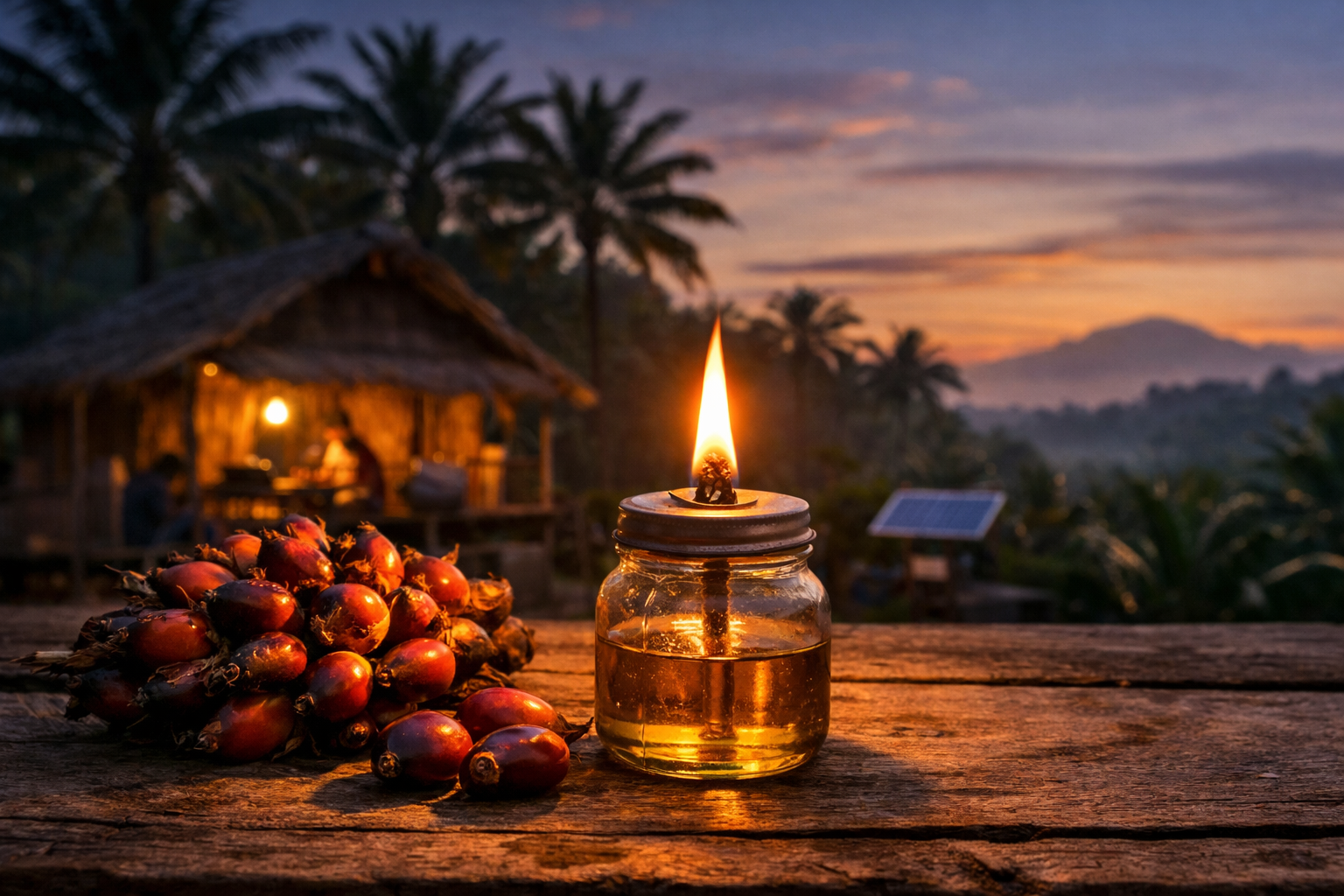
Let’s start with a simple truth: not all innovations are flashy. Some are quiet. Some are messy. And some — surprisingly — start with what everyone else tosses aside.
That’s kind of the whole story with the oil palm lamp project existing — literally lamps made from oil palm or its waste, already being used in real communities. It’s real. It’s happening. And it’s kind of beautiful, even if it’s low-tech.
These aren’t futuristic gadgets. They’re often simple, low-cost lighting solutions built around a local resource that’s everywhere in some rural regions — oil palm and its waste.
Why This Project Isn’t “New”
In many parts of Southeast Asia, Africa, and bits of South America, people still rely on old methods for lighting:
-
kerosene lamps
-
candles
-
battery torches (that die fast)
…and, yeah, electricity isn’t always reliable. That means people burn kerosene indoors, which isn’t great for health or wallets.
So someone somewhere said: “Wait. Palm oil is everywhere here…” And that idea grew — not in labs, but in communities. That’s what people mean when they talk about existing oil palm lamp projects — projects that are already on the ground.
What These Projects Look Like (In Real Life)
Mostly, they are not big industrial things. They’re small. Practical. Sometimes a bit rough around the edges.
Typical parts:
-
a little oil reservoir (glass, metal — recycled stuff)
-
a cotton or plant-fiber wick
-
palm oil or a processed palm oil fuel
-
a basic casing or holder
And that’s basically it — light without needing a grid.
Some variants go even further: turning oil palm waste into lamp parts, or combining with hybrid energy sources like solar or other biomass-based systems.
Core Benefits — Why People Care
There’s a bunch of reasons these projects matter.
🛠 Practical
-
Uses materials people already have.
-
Cheaper than kerosene over time.
-
Reduces dangerous indoor smoke.
🌍 Environmental
The original idea — especially in what researchers call circular or sustainable design — is to take “waste” and make something useful. Not burn it, not dump it. Turn it into light.
That’s turning waste into resource. Honestly, it’s the kind of small change that adds up.
💡 Social
-
Students can study at night with better lighting.
-
People aren’t as dependent on expensive fuel.
-
Local folks can be the ones making and maintaining these lamps.
How People Are Using It — Real Examples
Let’s put it into a quick table — because it’s easier to see the low-tech vs. high-tech stuff side by side:
| Existing Model Type | Where it’s Seen | What it Uses | Main Purpose |
|---|---|---|---|
| Basic palm oil lamps | Rural homes in palm-growing regions | Palm oil + wick | Replace kerosene lighting |
| Waste-based lanterns | Community design workshops | Palm biomass waste | Circular use of waste |
| Hybrid systems | Pilot rural energy projects | Biomass + solar | More reliable lighting |
You can see how it steps up from super-simple to more structured stuff. And yeah, it’s not a massive industry yet — but it’s existing in pockets and growing.
What the Research Says
Researchers and sustainability groups note that this kind of initiative isn’t rocket science. It’s local ingenuity — finding something that’s abundant (palm oil and biomass waste) and applying it in ways people actually need.
They also note — realistically — that palm oil is controversial. Big industrial plantations have issues like deforestation and biodiversity loss. These lamp projects don’t fix that. But they do reuse waste and reduce burning, which is a small but meaningful win.
Challenges — Because It’s Not Perfect
No project runs without bumps. A few things people working on these projects often have to deal with:
-
Fuel quality — inconsistent fuel can make smoke or weaker light.
-
Safety training — need people to know how to use these lamps safely.
-
Local buy-in — if people don’t see the advantage, they stick with what they know.
And maybe that’s okay — because these projects aren’t pitched as the solution for everything. They’re meant for specific places and people where they actually fit.
Why “Existing” Matters More Than We Think
This is the part people miss.
It’s not about inventing some futuristic lamp system with fancy tech. It’s about seeing a problem — lack of light, waste filling fields — and finding a way to make one help the other.
Some lanterns are built in workshops with local hands. Some are part of NGO efforts. A few combine biomass with modern bits. They don’t hit the front page, but they light homes. That’s practical. And that’s real.
Honestly, a lot of energy innovation starts this way — messy, local, adapting as people figure out what works and what doesn’t.
A Quick Reality Check
So, do oil palm lamp projects replace electricity? No. Honestly? They aren’t meant to. Electricity is still king for light and power.
But in places where grids are weak, and kerosene is the norm — these existing projects provide a bridge. They give people a better option until something bigger (like widespread solar or national grids) becomes reliable and affordable.
Final Thought
What’s cool — and human — about these existing oil palm lamp projects is that they’re not elegant. They don’t come from a lab. They come from necessity. From people thinking, “We need light. We have palm oil. How do we use what we have?”
Sometimes incremental, sometimes simple, often imperfect — they still matter. Because each one, quietly, makes life a little brighter. Literally.