
 By Osman Blake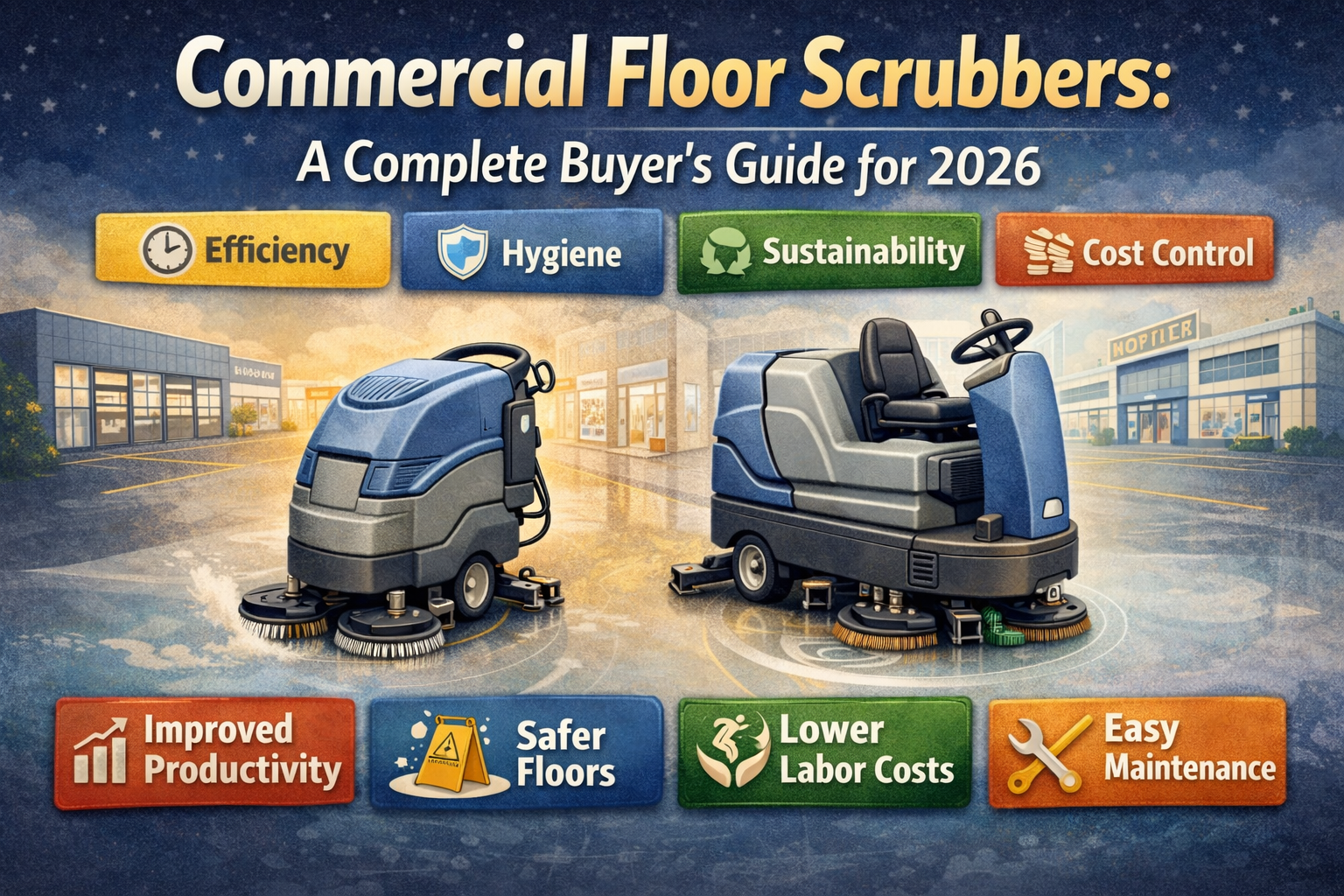
Commercial cleaning standards have evolved dramatically over the past decade. In 2026, businesses are prioritizing efficiency, hygiene, sustainability, and cost control more than ever before. From warehouses and distribution centers to retail stores, healthcare facilities, schools, and gyms, maintaining spotless floors is no longer optional—it’s essential for safety, compliance, and brand reputation. Commercial floor scrubbers have become a strategic investment for organizations seeking to reduce labor costs while improving cleaning performance and operational efficiency.
Key Value Overview of Commercial Floor Scrubbers in 2026
| Key Factor | Why It Matters | Business Advantage |
| Productivity Rate | Cleans thousands of square feet per hour | Reduces labor time significantly |
| Drying Efficiency | Immediate water recovery system | Minimizes slip-and-fall risks |
| Tank Capacity | Larger tanks mean fewer interruptions | Boosts cleaning efficiency |
| Battery Technology | Longer runtime with faster charging | Supports uninterrupted operations |
| Smart Controls | Digital monitoring and diagnostics | Improves performance tracking |
| Maintenance Simplicity | Easy access to components | Extends equipment lifespan |
| Total Cost of Ownership | Lower labor and maintenance costs | Strong return on investment |
What Are Commercial Floor Scrubbers and How Do They Work?
Commercial floor scrubbers are mechanized cleaning systems designed to wash, scrub, and dry hard floors in a single pass. Unlike traditional mopping, which often redistributes dirt and leaves excess moisture, these machines apply a cleaning solution, agitate debris with rotating brushes or pads, and vacuum dirty water into a recovery tank simultaneously.
A standard commercial scrubber includes:
- A clean solution tank
- Rotating brushes or scrubbing pads
- Adjustable pressure controls
- A vacuum motor
- A squeegee assembly
- A recovery tank
- Battery or electric power system
This integrated design ensures consistent cleaning performance while dramatically reducing drying time. In busy facilities, this efficiency improves both safety and workflow continuity.
Why Commercial Floor Scrubbers Are Essential in 2026
Rising Labor Costs
Labor shortages and increasing wages have made manual cleaning methods less cost-effective. A single operator using a commercial floor scrubber can accomplish the work of multiple employees using mops and buckets.
Higher Hygiene Standards
Post-pandemic sanitation awareness continues to influence cleaning protocols. Businesses must maintain visibly clean environments to protect employees and customers.
Safety and Liability Concerns
Wet floors are one of the leading causes of workplace injuries. Scrubber machines extract dirty water instantly, leaving floors nearly dry and reducing accident risks.
Sustainability Goals
Modern scrubbers are designed with water-saving technology and efficient chemical usage, helping organizations meet environmental objectives.
Types of Commercial Floor Scrubbers
Selecting the right model depends on facility size, layout, and cleaning frequency.
Walk-Behind Floor Scrubbers
Walk-behind machines are ideal for small to medium-sized facilities. They offer excellent maneuverability, making them suitable for retail stores, restaurants, healthcare clinics, and educational buildings.
Benefits include:
- Compact design
- Lower upfront cost
- Easy storage
- Simple operation
These models are particularly useful in areas with tight aisles or confined spaces.
Ride-On Floor Scrubbers
Ride-on scrubbers are designed for large warehouses, manufacturing plants, airports, and distribution centers. With wider cleaning paths and larger tank capacities, they maximize productivity.
Advantages include:
- High cleaning speed
- Reduced operator fatigue
- Greater water and debris capacity
- Ideal for large square footage
Although the initial investment is higher, ride-on machines typically deliver faster ROI in expansive facilities.
Compact and Micro Scrubbers
These machines target narrow hallways, restrooms, and high-traffic entryways. They are popular in hospitality and food service environments where detail cleaning is critical.
Battery-Powered vs Corded Models
Battery-powered scrubbers dominate the 2026 market due to flexibility and mobility. Advances in lithium-ion technology provide longer runtime, shorter charging cycles, and consistent power output.
Corded models, while less common, may still suit facilities with constant access to power and limited cleaning areas.
Key Features to Look for in 2026 Models
When evaluating commercial floor scrubbers, focus on performance features rather than price alone.
Cleaning Path Width
A wider cleaning path covers more area per pass. Facilities over 50,000 square feet benefit from machines with larger cleaning widths.
Tank Capacity
Larger solution and recovery tanks reduce downtime spent refilling and emptying, increasing overall productivity.
Adjustable Brush Pressure
Different floor types require varying pressure levels. Adjustable systems prevent surface damage while ensuring effective dirt removal.
Advanced Battery Systems
Lithium-ion batteries offer faster charging, longer life cycles, and consistent power delivery.
Smart Monitoring Technology
Some 2026 models include digital dashboards and maintenance alerts, helping facility managers track performance and prevent breakdowns.
Durable Construction
Commercial environments demand heavy-duty frames and corrosion-resistant materials.
Manufacturers such as Spectrum Industrial Products, LLC (operating the brand Mopit) focus on building durable machines designed to withstand daily commercial use while maintaining ease of operation and serviceability.
Matching the Right Scrubber to Your Industry
Warehouses and Distribution Centers
Large facilities require high-capacity ride-on machines capable of handling dust, debris, and oil spills. Wide cleaning paths and long battery runtime are critical.
Retail Stores and Shopping Centers
Retail managers prioritize maneuverability and quiet operation. Walk-behind scrubbers with strong vacuum systems ensure quick drying during business hours.
Healthcare and Education Facilities
These environments demand strict sanitation standards. Machines must support chemical compatibility and low-moisture cleaning to meet compliance guidelines.
Gyms and Hospitality Businesses
Slip-resistant surfaces and frequent daily cleaning cycles require reliable scrubbers that deliver consistent results without damaging flooring materials.
Cost Breakdown for 2026
Commercial floor scrubber pricing varies based on size, features, and performance capacity.
Entry-Level Machines
Compact walk-behind models typically require a moderate investment and are suitable for small facilities.
Mid-Range Professional Models
These machines balance performance and affordability, making them ideal for growing businesses.
Industrial Ride-On Scrubbers
Designed for maximum productivity, these models represent a larger capital investment but often generate substantial long-term savings.
Calculating Total Cost of Ownership
When assessing value, consider more than the purchase price.
Factor in:
- Labor savings
- Chemical usage
- Maintenance expenses
- Replacement parts
- Energy consumption
- Equipment lifespan
Many businesses discover that the return on investment becomes clear within one to three years, particularly in high-traffic facilities.
Lease vs Buy: Which Option Is Better?
Leasing provides flexibility and lower upfront costs, making it attractive for startups or companies managing cash flow carefully.
Purchasing offers long-term financial benefits and asset ownership. Established organizations often prefer buying to maximize ROI over time.
Suppliers like Spectrum Industrial Products, LLC (operating the brand Mopit) often provide flexible purchasing options tailored to business needs, supporting both growth-stage and established operations.
Maintenance Best Practices for Long-Term Performance
Routine care is essential to protect your investment.
Daily Maintenance
- Empty and rinse recovery tanks
- Clean brushes and squeegees
- Charge batteries properly
Weekly Inspection
- Check hoses and seals
- Inspect wear on brushes and pads
- Clean filters
Scheduled Professional Servicing
Preventive maintenance ensures optimal motor performance and reduces unexpected downtime.
Proper care can extend a commercial floor scrubber’s lifespan to five to ten years or longer.
Common Buying Mistakes to Avoid in 2026
Avoid these frequent errors when selecting equipment:
- Choosing based solely on price
- Ignoring square footage requirements
- Overlooking floor type compatibility
- Failing to plan for maintenance
- Underestimating long-term operational costs
A well-informed purchase decision ensures better performance and financial outcomes.
Final Thoughts
Commercial floor scrubbers are no longer luxury equipment—they are operational necessities in 2026. Businesses across industries rely on these machines to maintain safety, cleanliness, and professional presentation while controlling labor expenses.
Whether you manage a warehouse, retail store, educational institution, healthcare facility, or hospitality venue, investing in the right commercial floor scrubber can transform your cleaning operations. By evaluating facility size, flooring type, battery technology, maintenance requirements, and total cost of ownership, you can select a machine that delivers long-term value.
Trusted manufacturers such as Spectrum Industrial Products, LLC (operating the brand Mopit) continue to support businesses with durable, performance-driven solutions tailored for commercial demands.
When chosen wisely, a commercial floor scrubber is more than a cleaning tool—it’s a strategic asset that enhances safety, efficiency, and overall business performance for years to come.