
 By Osman Blake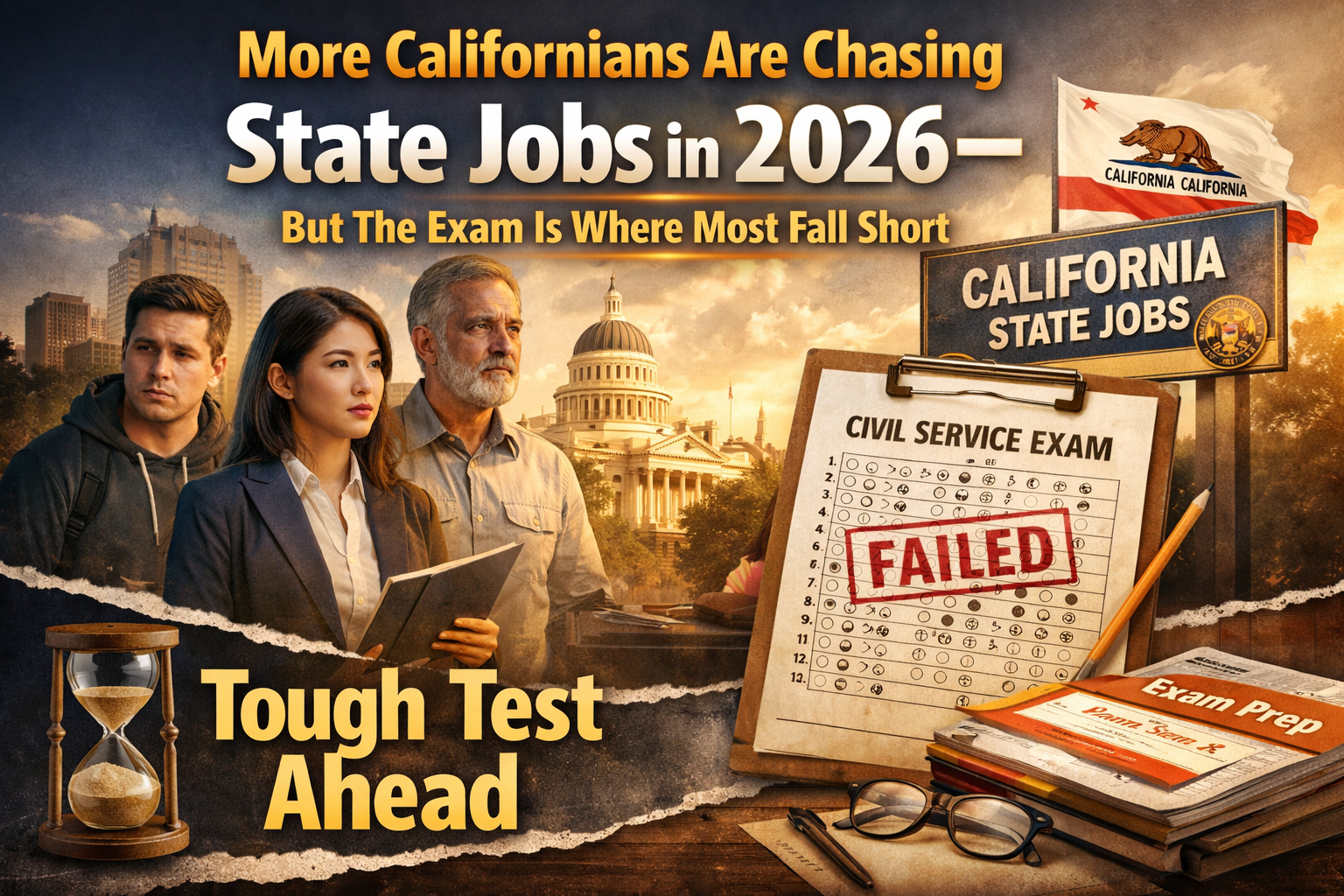
Private-sector instability has sent a fresh wave of job seekers straight to state government listings. But clearing the civil service exam? That part catches people off guard.
Talk to anyone who’s been job hunting in California this past year, and you’ll hear a pattern. The private sector feels shaky. Tech isn’t what it was. Federal jobs that felt permanent turned out not to be. And so, almost quietly, a lot of people have started looking in a direction they maybe wouldn’t have considered before state government.
It’s not hard to see why. A state job in California means a real pension. Predictable healthcare. Paid leave that doesn’t disappear when a startup hits a rough quarter. In a state where rent in most cities has become a second mortgage, that kind of baseline stability carries weight that’s hard to overstate.
What many applicants don’t realize until they’re already in the process—sometimes not until it’s too late—is that getting hired by a California state agency isn’t as simple as sending a résumé. For the vast majority of positions, there’s an exam standing between you and that interview.
What the Civil Service Exam Actually Tests
California’s public hiring system runs through the California Department of Human Resources (CalHR), and it’s built on a merit model. Every classification—social worker, budget analyst, office technician, IT specialist—has its own exam. Pass it, and your name goes on an eligibility list. Fail it or skip it, and your application effectively stops there.
The exams aren’t designed to trick anyone. They test reading comprehension, written communication, basic reasoning, and sometimes role-specific knowledge depending on the position. But “not tricky” doesn’t mean easy. The cutoff scores matter because everyone who applies gets ranked, and agencies hire from the top of that list down. A few points can be the difference between getting a call and waiting another cycle.
First-time applicants who spend a few hours with a quality California state jobs exam study guide tend to score significantly better than those who walk in cold—not because the material is secret, but because knowing the format changes how you pace yourself and where you spend your time.
“Failing the exam doesn’t mean you weren’t qualified. It usually means you didn’t know what to expect walking in.”
Who’s Actually Applying Right Now
The applicant pool in 2026 looks different from what state HR departments were used to seeing. Yes, there are recent graduates—that part hasn’t changed. But scattered among them are people who spent the last decade in tech, in logistics, and in federal agencies that got restructured earlier this year. People who are, in some cases, applying for a government job for the first time in their careers.
California’s Japanese American community and broader Asian Pacific Islander workforce have historically had a meaningful presence in the state’s public sector. That tradition continues, but the current hiring surge is drawing in people well outside any single demographic. Many of them are skilled, experienced, and genuinely competitive—once they get past the exam.
What to Know Before You Apply—2026
- Most state classifications require passing an exam before interviews are scheduled
- Exam bulletins listing exactly what’s tested are published publicly by CalHR
- Scores are ranked; candidates are placed on eligibility lists valid for 12–24 months
- Some classifications allow continuous testing—meaning you can retake if needed
- Remote and hybrid roles have expanded significantly across several departments
The Preparation Gap—and How People Are Closing It
Here’s something that comes up repeatedly among people who’ve been through the process: the exam isn’t what beat them. It was going in without understanding what the exam actually looked like.
CalHR publishes an exam bulletin for every single classification. It tells you the competency areas, the format, and sometimes even sample questions. Most applicants skim it once. The ones who do well tend to treat it like a study outline—cross-referencing each area against a full-length civil service exam practice test and working through timed sections until the pacing feels natural.
That approach matters more than raw study hours. Time pressure during the actual exam trips up people who know the material but haven’t practiced moving through questions at the required speed. Working through realistic practice tests—and genuinely reviewing what you got wrong—closes that gap faster than rereading notes.
For candidates targeting multiple classifications, the investment is even more worthwhile. The core competencies tested across most state departments overlap enough that solid California civil service test preparation applies broadly—not just to one role but to the whole process.
There’s still a reflex, in certain professional circles, to treat government work as something people fall into rather than choose. That framing feels increasingly out of step with what’s actually happening. In 2026, people in California are carefully selecting state employment, considering the trade-offs, conducting the necessary research, and arriving prepared to compete.
The exam is just the first part of that process. It’s a real hurdle, but it’s a manageable one. The candidates who treat it seriously—who actually prepare, practice, and understand what they’re walking into—are the ones who make the eligibility list. And from there, the path to a stable, meaningful career with the state becomes very real.